

Oral Cancer: The Warning Signs You Shouldn’t Ignore
A small sore inside your mouth that does not heal. A patch on your tongue that looks different. Mild discomfort when swallowing. These changes are easy to overlook, especially when they are not painful at first.
Many people wait to see if the symptoms go away on their own. Others assume it is something minor, like an irritation or a temporary issue. Oral cancer often develops this way, with subtle early signs that do not always feel urgent.
Another challenge is visibility. Some areas of the mouth are difficult to examine closely without the right tools or training. That makes regular dental visits and professional evaluations an important part of early detection.
This guide explains what oral cancer is, what causes it, and the warning signs you should pay attention to, reflecting the professional perspective of Dr. Frank Yeh. You will also learn how it is diagnosed, what treatment may involve, and how recovery typically works.
The goal is to give you clear, reliable information so you can recognize changes early and know when it is time to seek care.
What is oral cancer?
“Oral cancer refers to cancer that develops in the tissues of the mouth or throat. This can include the lips, tongue, cheeks, gums, the floor of the mouth, and the roof of the mouth.” - Dr. Frank Yeh.
The definition by the National Institute of Dental and Craniofacial Research (NIDCR) goes in the same way as the doctor’s:
“Oral cancer includes cancers of the mouth and the back of the throat. Oral cancers develop on the tongue, on the tissue lining the mouth and gums, under the tongue, at the base of the tongue, and the area of the throat at the back of the mouth.”
It often begins as a small growth or sore, sometimes called an oral tumor, that does not heal as expected. Over time, these abnormal cells can grow and affect nearby tissues.
Like many cancers, oral cancer is easier to treat when it is found early. That is why paying attention to changes in your mouth and seeking evaluation when something feels off is important.
What causes oral cancer?
Oral cancer develops when cells in the mouth change and begin to grow in an uncontrolled way. These changes are often linked to certain risk factors.
Common causes and contributing factors include:
- Tobacco use, including cigarettes, cigars, and smokeless tobacco
- Alcohol consumption, especially when combined with tobacco
- Human papillomavirus (HPV), a virus linked to some throat and oral cancers
- Sun exposure, particularly affecting the lips
- Chronic irritation, such as poorly fitting dental appliances
Not everyone with these risk factors will develop oral cancer, but they do increase the likelihood. In some cases, oral cancer can develop without a clear cause.
Understanding these factors helps you make informed decisions about your health and recognize when to be more attentive to changes.
What are the early signs of oral cancer?
Early signs of oral cancer are often subtle and may not cause pain. This is one reason the condition can go unnoticed in its initial stages.
Common early symptoms include:
- A sore or ulcer that does not heal within two weeks
- Red or white patches inside the mouth
- A lump or thickened area in the cheek or gums
- Persistent soreness or irritation
- Difficulty chewing or swallowing
You may also notice:
- Changes in how your teeth fit together
- Numbness in part of the mouth or lips
- A feeling that something is stuck in your throat
Stage 1 oral cancer symptoms are often mild, which makes them easier to dismiss. Even so, these early signs are when treatment tends to be most effective.
If you notice any of these symptoms and they do not improve, it is important to have them evaluated by a dental or medical professional.
What does oral cancer look like?
Oral cancer does not always look dramatic in its early stages. In many cases, it appears as subtle changes in the tissues of your mouth that do not go away over time.
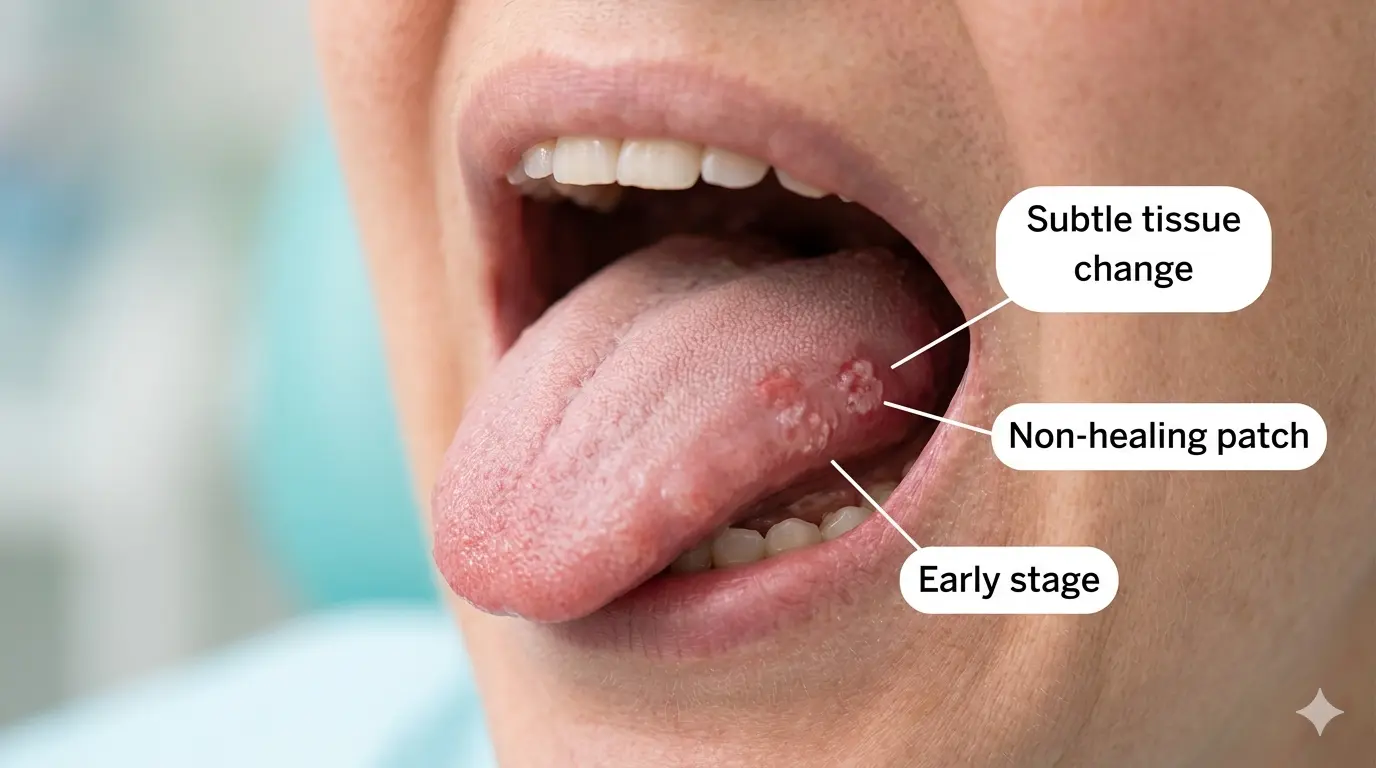
You might notice:
- A sore or ulcer that does not heal
- Red or white patches on the tongue, gums, or inner cheeks
- A small lump or thickened area
- Rough or crusted spots, especially on the lips
- Areas that may bleed easily or feel different when touched
As the condition progresses, changes can become more noticeable:
- Larger growths or visible oral tumors
- Swelling in the jaw or neck
- Difficulty moving the tongue or opening the mouth
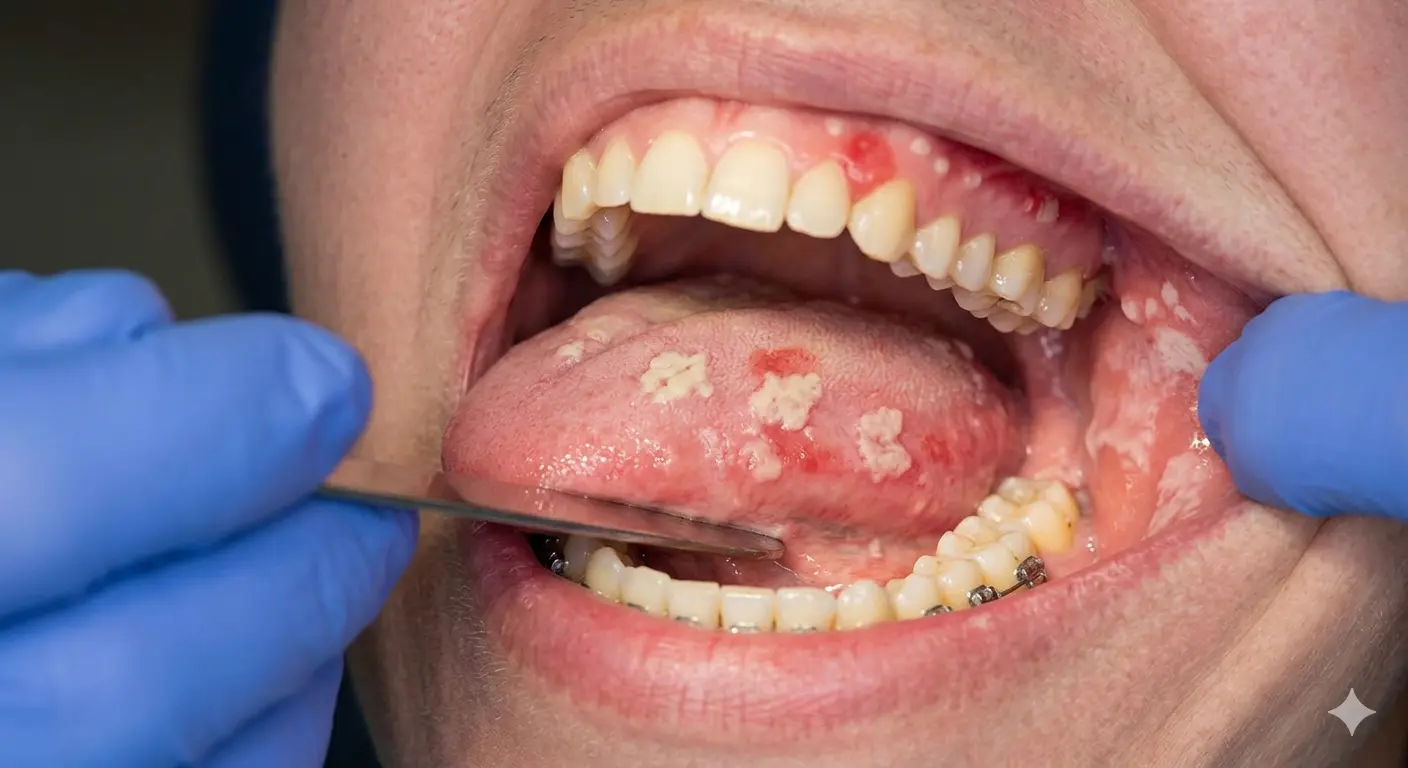
One important detail is persistence. Many harmless conditions in the mouth heal within one to two weeks. When a spot, sore, or lump remains longer than that, it should be evaluated.
What is the survival rate for oral cancer?
The survival rate for oral cancer depends strongly on how early it is detected and treated.
According to data from the NDICR:
- The overall 5-year survival rate is about 68%
- When cancer is found early (localized), survival can be as high as around 86%
- If the cancer has spread to distant parts of the body, survival may drop to around 40%
These numbers show a clear pattern. Early detection makes a meaningful difference!
In practical terms:
- Early-stage oral cancer is often treatable with good outcomes
- Advanced stages require more complex treatment and carry a higher risk
Survival rates are based on large groups of patients, so they cannot predict an individual outcome. Your prognosis depends on factors like the stage of the cancer, your overall health, and how your body responds to treatment.
What remains consistent is this: recognizing symptoms early and seeking evaluation gives you the best chance for a positive outcome.
Oral cancer symptoms
Oral cancer symptoms can develop gradually. Some are easy to overlook at first, especially if they are not painful.
Common symptoms include:
- A sore that does not heal within two weeks
- Red or white patches inside the mouth
- A lump or thickened area in the cheek, gums, or tongue
- Persistent mouth pain or discomfort
- Difficulty chewing or swallowing
You may also notice:
- Numbness in the lips, tongue, or other areas
- A feeling that something is stuck in your throat
- Changes in speech or voice
- Loose teeth without a clear dental cause
Symptoms can vary depending on the location of the cancer. Some people experience only one or two signs, while others may notice a combination.
If any of these symptoms persist or worsen, it is important to have them evaluated.
Oral cancer stages
Oral cancer is classified into stages based on the size of the tumor and whether it has spread. Staging helps guide treatment and gives a clearer picture of what to expect.
In general:
- Stage 1
The tumor is small and limited to one area. It has not spread to lymph nodes or other parts of the body. - Stage 2
The tumor is larger but still contained within the original area. - Stage 3
The cancer may have spread to nearby lymph nodes or grown deeper into surrounding tissues. - Stage 4
The cancer has spread more extensively, possibly to other parts of the body.
Earlier stages are usually easier to treat and may require less extensive procedures. More advanced stages often involve a combination of treatments.
Your care team will determine the stage based on imaging, physical exams, and biopsy results.
Treatment for oral cancer
Treatment for oral cancer depends on the stage, location, and your overall health. The goal is to remove or control the cancer while preserving function as much as possible.
Common treatment options include:
- Surgery
Removal of the tumor and, in some cases, nearby tissue or lymph nodes. An oral surgeon may be involved, especially for cancers affecting the jaw or surrounding structures. - Radiation therapy
Uses targeted energy to destroy cancer cells, often used after surgery or as a primary treatment in certain cases. - Chemotherapy
Medications that help kill cancer cells or stop them from growing, sometimes combined with radiation. - Targeted therapy
Focuses on specific characteristics of cancer cells to improve treatment effectiveness.
Treatment plans are often combined and adjusted based on how the cancer responds.
Recovery and follow-up care are part of the treatment journey. Your team will monitor healing, manage side effects, and check for any signs of recurrence.
Can you recover from oral cancer?
Many people recover from oral cancer, especially when it is diagnosed early and treated promptly. Outcomes vary based on the stage of the cancer, its location, and how your body responds to treatment.
Early-stage cases often have a more straightforward recovery, sometimes involving a single form of treatment such as surgery or radiation. More advanced stages may require a combination of treatments, which can extend the recovery process.
Recovery is not only about eliminating cancer. It also involves restoring function, such as speaking, eating, and swallowing, and supporting your overall well-being during healing.
Your care team will guide you through each step, adjusting treatment and follow-up care based on your progress.
What is the recovery process after oral cancer treatment?
Recovery after oral cancer treatment happens in phases and looks different for each patient. It depends on the type of treatment received and how extensive it was.
In the early phase, you may experience:
- Swelling and discomfort, especially after surgery
- Fatigue, which is common after radiation or chemotherapy
- Difficulty eating or swallowing, depending on the treatment area
As healing progresses, the focus shifts to regaining function:
- Gradual return to normal eating habits
- Speech and swallowing improvements, sometimes with therapy
- Monitoring for any signs of recurrence
Long-term recovery may include:
- Regular follow-up visits to check healing and overall health
- Nutritional support, if eating was affected
- Rehabilitation, when needed, to restore function
If you live in Virginia Beach, access to follow-up care, including specialists in oral and maxillofacial surgery, can help support recovery and address any concerns as they arise.
It is normal for recovery to take time. Some patients feel ready to return to daily activities sooner, while others need a longer period to fully heal. Your care team will help you understand what to expect based on your specific situation.
How can oral cancer be prevented?
Oral cancer cannot always be prevented, but certain habits and choices can lower your risk.
Some of the most effective steps include:
- Avoiding tobacco products, including cigarettes and smokeless tobacco
- Limiting alcohol consumption, especially when combined with tobacco
- Protecting your lips from sun exposure, using lip balm with SPF
- Maintaining good oral hygiene and regular dental care
- Attending routine dental checkups, where early changes can be identified
You can also reduce risk by staying aware of changes in your mouth. Paying attention to sores, patches, or discomfort that does not improve helps you act earlier if needed.
Prevention is not about eliminating all risk. It is about reducing exposure to known factors and staying attentive to your oral health.
Oral cancer awareness
Oral cancer awareness plays an important role in early detection. Many cases are diagnosed later than they should be, often because early symptoms are subtle and easy to dismiss.
Awareness efforts focus on helping people recognize warning signs and understand when to seek care.
One example is Oral Cancer Awareness Month, observed each April. During this time, healthcare providers and organizations share information about risk factors, symptoms, and the importance of regular screenings.
Common goals of these campaigns include:
- Encouraging routine oral cancer screenings during dental visits
- Educating about risk factors, such as tobacco, alcohol, and HPV
- Promoting early evaluation of unusual symptoms
If you live in Virginia Beach, community awareness and access to local dental and surgical providers can make it easier to get screened and evaluated when something does not feel right.
These efforts are designed to make early detection more common, which directly improves treatment outcomes.
When should I see a doctor about possible oral cancer symptoms?
It is important to seek care when symptoms persist or change over time.
You should consider seeing a doctor or dental professional if you notice:
- A sore that does not heal within two weeks
- Red or white patches that remain or grow
- A lump or thickened area in the mouth or neck
- Difficulty chewing, swallowing, or speaking
- Numbness or unexplained pain
These signs do not always mean cancer, but they should be evaluated to rule out serious conditions.
Early evaluation allows for quicker diagnosis and, if needed, earlier treatment. This often leads to better outcomes and less complex care.
If you are unsure whether a symptom is significant, it is reasonable to have it checked. A professional exam can provide clarity and help you decide on the next steps.
FAQs
Where does oral cancer usually occur?
Oral cancer can develop in several areas of the mouth and surrounding tissues. The most common locations include:
- The tongue, especially the sides
- The floor of the mouth, under the tongue
- The inner cheeks
- The gums
- The roof of the mouth
- The lips, particularly the lower lip
Cancers can also extend into nearby areas such as the throat. Location often influences symptoms and treatment options.
Who is at risk for oral cancer?
Certain factors increase the likelihood of developing oral cancer. Risk tends to be higher in individuals who:
- Use tobacco products
- Consume alcohol regularly
- Have been exposed to HPV (human papillomavirus)
- Have significant sun exposure, affecting the lips
- Are over the age of 40, though younger individuals can also be affected
Risk factors do not guarantee that oral cancer will develop, but they do increase the need for awareness and regular screening.
Can smoking or alcohol cause oral cancer?
Yes, both smoking and alcohol are major risk factors for oral cancer.
Tobacco use exposes the tissues in your mouth to harmful chemicals that can damage cells over time. Alcohol can also irritate and weaken the lining of the mouth.
When combined, these two factors significantly increase the risk compared to either one alone.
Can HPV cause oral cancer?
Yes, certain types of HPV are linked to oral and throat cancers.
HPV-related oral cancers often affect the back of the throat, including the base of the tongue and tonsils. These cases may develop even in individuals without a history of tobacco or alcohol use.
Understanding this connection has helped improve awareness and screening for different types of oral cancer.
Is oral cancer painful in early stages?
Oral cancer is often not painful in its early stages. Many early signs, such as small sores or patches, may not cause discomfort.
This is one reason it can go unnoticed. Pain may develop later as the condition progresses.
Because early symptoms are subtle, it is important to pay attention to changes that persist, even if they are not painful.
How is oral cancer diagnosed?
Diagnosis usually begins with a clinical examination by a dentist or medical provider. They will look for visible changes and feel for any lumps or abnormalities.
If something appears suspicious, additional steps may include:
- Biopsy, where a small sample of tissue is taken and examined
- Imaging tests, such as X-rays, CT scans, or MRI
- Physical examination of nearby lymph nodes
These tests help confirm whether cancer is present and determine its stage.
Early diagnosis allows for more treatment options and improves the chances of a successful outcome.
Can a dentist detect oral cancer?
Yes, dentists are often the first to detect signs of oral cancer.
During routine visits, dentists examine the mouth, gums, tongue, and surrounding tissues. They are trained to identify unusual changes, such as sores, patches, or lumps that may need further evaluation.
Regular dental checkups play an important role in early detection.
Do you need surgery for oral cancer?
Surgery is a common treatment for oral cancer, especially in early stages. The goal is to remove the tumor and a margin of surrounding tissue to reduce the risk of recurrence.
Not all cases require surgery alone. Treatment may also include radiation therapy, chemotherapy, or a combination of approaches.
The need for surgery depends on:
- The stage of the cancer
- The location of the tumor
- Your overall health
An oral and maxillofacial surgeon may be involved when the cancer affects the jaw or surrounding structures.
Can oral cancer spread to other parts of the body?
Yes, oral cancer can spread if it is not treated.
It often spreads first to nearby lymph nodes in the neck. In more advanced stages, it may spread to other parts of the body, such as the lungs.
This process is known as metastasis. Early detection and treatment reduce the risk of spread and improve outcomes.
What are the complications of oral cancer?
Complications can result from both the cancer itself and the treatments used to manage it.
Possible complications include:
- Difficulty speaking or swallowing
- Changes in appearance, depending on the treatment area
- Nutritional challenges, if eating becomes difficult
- Recurrence of cancer, especially in advanced cases
Your care team will work to manage these effects and support your recovery throughout treatment.
How long does treatment for oral cancer take?
Treatment length varies depending on the stage of the cancer and the type of care required.
In general:
- Surgery recovery may take several weeks
- Radiation therapy often occurs over multiple weeks
- Chemotherapy may be given in cycles over a period of time
Some patients complete treatment within a few weeks, while others may require several months, especially when multiple therapies are combined.
Follow-up care continues after treatment ends. These visits help monitor healing and check for any signs of recurrence.
Don’t Ignore the Signs — Get Checked Early
Oral cancer often begins with subtle changes, such as a sore that does not heal, a patch that looks different, or mild discomfort that lingers longer than expected. As you’ve seen throughout this guide, these early signs are easy to overlook, but they are also the stage when treatment is most effective.
We covered what oral cancer is, what causes it, and how it can appear in different areas of the mouth. You also learned how symptoms develop, how the condition is diagnosed, and what treatment and recovery may involve. Most importantly, we looked at survival rates and what they mean in real terms.
Awareness, routine dental visits, and paying attention to persistent symptoms all play a role in catching oral cancer sooner. Even small concerns are worth evaluating when they do not improve.
If something appears suspicious, your dentist may recommend monitoring the area, performing a biopsy, or referring you to a specialist, such as an oral surgeon.
Taking action early helps protect not only your oral health, but your overall well-being.
