

Cleft Lip: A Parent’s Guide to Diagnosis and Surgery
Learning that your child has a cleft lip can bring a mix of emotions. For many parents, the diagnosis comes with questions, uncertainty, and concerns about what the future may hold. How will this affect feeding? Will my child need surgery? What will recovery look like? These are all common and understandable questions.
The good news is that a cleft lip is a well-understood condition with effective treatment options available. Advances in surgical techniques and coordinated care have helped countless children achieve excellent functional and cosmetic outcomes. With the right treatment plan and support team, most children with cleft lip go on to eat, speak, grow, and develop successfully.
Understanding the condition is often the first step toward feeling more confident about the road ahead. Knowing what causes cleft lip, how it is diagnosed, and what treatment involves can help families make informed decisions throughout their child's care journey.
In this guide, we'll explain what a cleft lip is, according to Dr. Frank Yeh’s expertise, including what symptoms and complications may occur, how cleft lip surgery is performed, and what parents can expect during recovery. We'll also discuss long-term care, the specialists involved in treatment, and answer some of the most common questions families have after receiving a diagnosis.
What is a cleft lip?
“A cleft lip is a congenital condition that occurs when the tissues that form the upper lip do not fully join together during early fetal development. As a result, an opening or split develops in the upper lip before birth.” - Frank Yeh
According to the U.S. Centers for Disease Control and Prevention (CDC), “a cleft lip happens if the tissue making up the upper lip doesn't join completely before birth, leaving an opening. The opening can be small, or it can go through the lip into the nose.”
The severity of a cleft lip can vary from child to child. Some infants have a small notch in the lip, while others have a larger separation that extends toward the nose. A cleft lip may affect one side of the mouth (unilateral cleft lip) or, less commonly, both sides (bilateral cleft lip).
A cleft lip is one of the most common birth defects affecting the face and mouth. It can occur on its own or alongside a cleft palate, which involves an opening in the roof of the mouth.
Although the condition is present at birth, modern treatment approaches have made it possible for most children to achieve excellent outcomes through surgical repair and ongoing care when needed.
Cleft lip symptoms
The most noticeable symptom of a cleft lip is the visible separation in the upper lip. In many cases, the condition is identified during a prenatal ultrasound or immediately after birth.
Depending on its severity, a cleft lip may also cause functional challenges, particularly during infancy.
Common signs and symptoms include:
- A visible split or opening in the upper lip
- A notch in the lip that ranges from mild to severe
- Changes in the shape of the nose
- Difficulty creating suction during feeding
- Milk leaking from the nose during feeding in some cases
- Slower weight gain if feeding challenges are significant
When a cleft lip occurs together with a cleft palate, additional symptoms may develop, including feeding difficulties, recurrent ear infections, and speech-related concerns later in childhood.
Parents need to remember that symptoms can vary widely. Some children experience only minor challenges, while others require more comprehensive treatment and support.
Differences Between Cleft Lip and Cleft Palate
Although the terms are often used together, a cleft lip and a cleft palate are not the same condition.
A cleft lip occurs when the tissues of the upper lip do not fully join before birth, creating a visible opening or separation in the lip. The condition may affect one side or both sides of the mouth and can range from a small notch to a larger gap extending toward the nose.
A cleft palate occurs when the roof of the mouth (palate) does not completely close during fetal development. Unlike a cleft lip, a cleft palate may not always be visible from the outside.
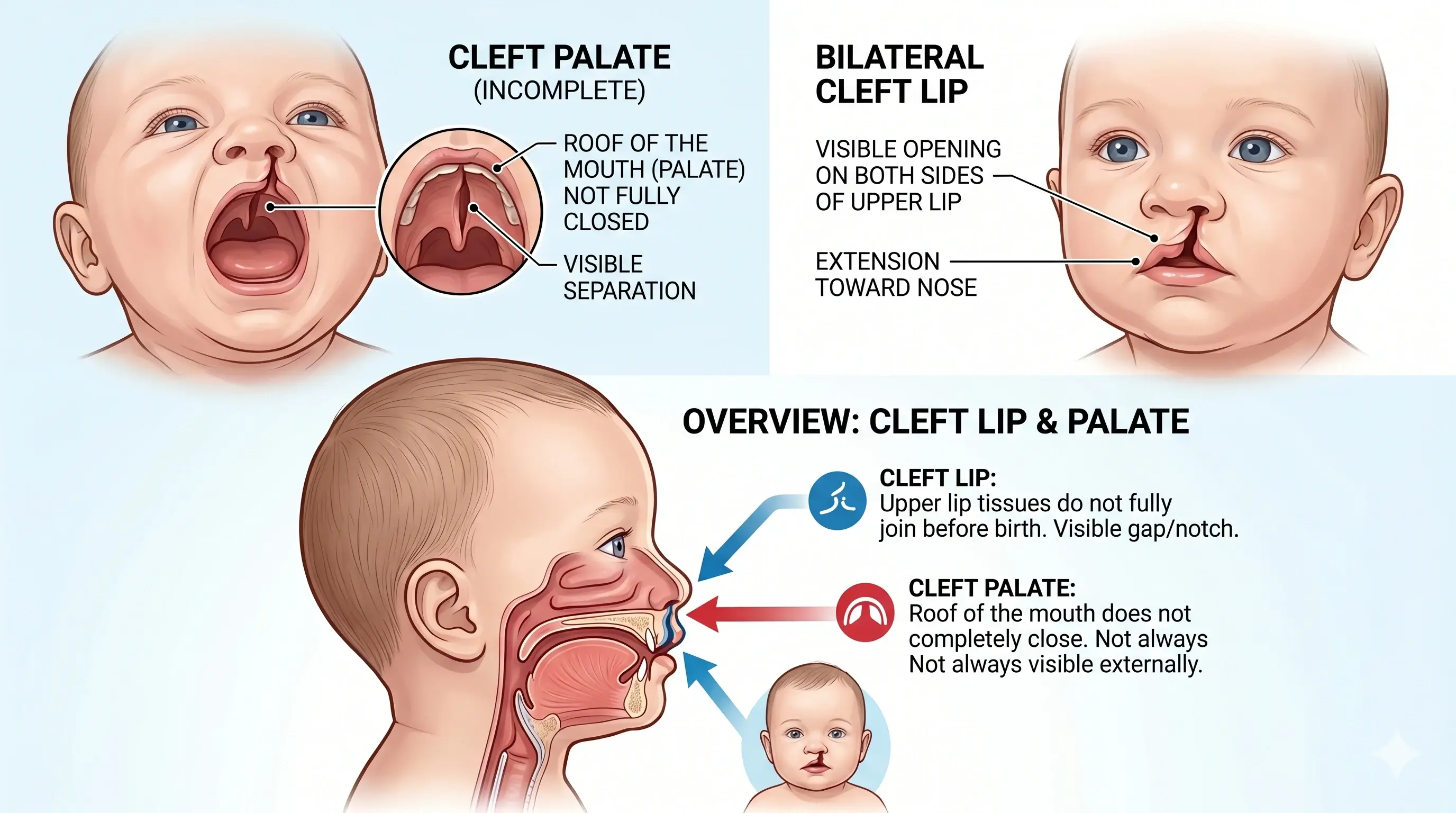
Some children have a cleft lip only, some have a cleft palate only, and others are born with both conditions.
The distinction is important because a cleft palate often creates additional challenges related to:
- Feeding and swallowing
- Speech development
- Hearing and ear infections
- Dental and jaw growth
While both conditions can be successfully treated, children with a cleft lip and palate typically require a more extensive treatment plan involving multiple specialists throughout childhood.
Understanding whether a child has a cleft lip, a cleft palate, or both helps healthcare providers develop the most appropriate care strategy and timeline for treatment.
What does a cleft lip look like?
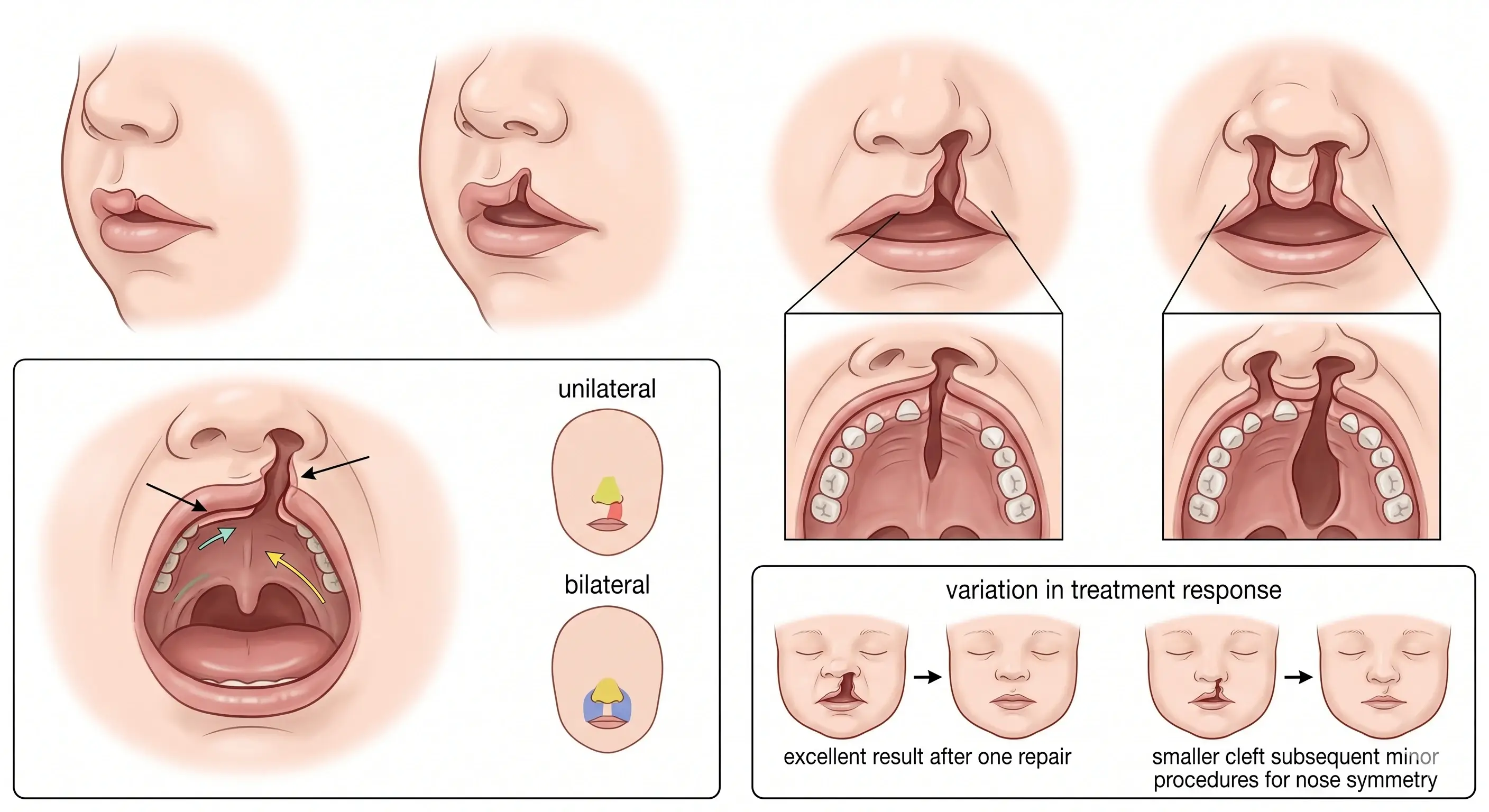
A cleft lip can vary significantly in appearance from one child to another. The condition occurs when the upper lip does not fully form during fetal development, resulting in a gap or opening that is present at birth.
In mild cases, a cleft lip may appear as a small notch or indentation in the upper lip. In more pronounced cases, the separation can extend from the lip toward the nostril and affect the shape of the nose.
Common appearances include:
- A small notch in the upper lip
- A gap on one side of the lip (unilateral cleft lip)
- Gaps on both sides of the lip (bilateral cleft lip)
- Changes in the shape or position of the nostril
- Separation extending into the gum line in some cases
The appearance alone does not always indicate the severity of the condition or the complexity of treatment. Some children with larger clefts respond very well to surgical repair, while others may require additional procedures over time depending on their specific needs.
Prenatal ultrasounds can often detect a cleft lip before birth, giving families time to learn about treatment options and prepare for their child's care.
Cleft lip complications
While many children with cleft lip go on to live healthy, active lives, the condition can sometimes create challenges that require specialized care and ongoing monitoring.
The type and severity of complications often depend on whether the child has a cleft lip alone or a cleft lip combined with a cleft palate.
Potential complications may include:
Feeding Difficulties
Infants with a cleft lip may have trouble creating the suction needed for breastfeeding or bottle-feeding. These challenges can sometimes make feeding more time-consuming and affect early weight gain.
Specialized bottles and feeding techniques are often recommended to help ensure adequate nutrition.
Speech and Language Challenges
Children who have both a cleft lip and a cleft palate may be more likely to experience speech difficulties as they grow.
Speech-language therapy can play an important role in helping children develop clear communication skills when needed.
Ear Problems and Hearing Concerns
When a cleft palate is present, children may be at higher risk for recurring ear infections and fluid buildup behind the eardrum.
Without proper management, these issues can sometimes affect hearing and speech development.
Dental and Orthodontic Issues
A cleft can affect the development and alignment of teeth and jaws.
Some children may experience:
- Missing teeth
- Extra teeth
- Misaligned teeth
- Bite problems
- Delayed tooth eruption
Orthodontic treatment is commonly incorporated into long-term cleft care plans.
Emotional and Social Challenges
Children with visible facial differences may occasionally face social or emotional challenges as they grow.
Supportive family environments, early treatment, and access to appropriate resources can help children build confidence and develop positive self-esteem.
If you live in Virginia Beach, access to coordinated care involving oral surgeons, orthodontists, speech therapists, and pediatric specialists can help address these challenges and support healthy development throughout childhood.
The encouraging news is that most complications associated with cleft lip can be managed successfully through early intervention and a comprehensive treatment plan tailored to the child's needs.
What are the main causes of a cleft lip?
According to Dr. Yeh, a cleft lip develops during early pregnancy when the tissues that form the upper lip do not fully fuse. This process typically occurs within the first few weeks of fetal development.
In many cases, there is no single identifiable cause. Instead, researchers believe cleft lip results from a combination of genetic and environmental factors.
Potential contributing factors include:
- Family history of cleft lip or cleft palate
- Certain genetic conditions or syndromes
- Maternal smoking during pregnancy
- Heavy alcohol consumption during pregnancy
- Uncontrolled diabetes during pregnancy
- Certain medications taken during early pregnancy
- Nutritional deficiencies, particularly inadequate folic acid intake
Parents need to understand that most cases of cleft lip are not caused by anything they intentionally did or failed to do during pregnancy. Even when risk factors are present, predicting exactly why one child develops a cleft lip while another does not is often impossible.
Researchers continue to study the complex interactions between genetics and prenatal development to better understand why cleft lip occurs.
What foods cause a cleft lip?
One of the most common misconceptions is that eating a particular food during pregnancy can directly cause a cleft lip.
There is currently no evidence that any specific food causes a cleft lip.
This condition develops very early in pregnancy as facial structures are forming. While nutrition plays an important role in healthy fetal development, no individual food has been proven to trigger the condition.
Instead of focusing on foods that "cause" cleft lip, healthcare providers emphasize the importance of maintaining a healthy, balanced diet before and during pregnancy.
Key nutritional recommendations often include:
- Adequate folic acid intake
- A variety of fruits and vegetables
- Lean proteins
- Whole grains
- Prenatal vitamins as recommended by a healthcare provider
Research suggests that proper folic acid intake may help support healthy fetal development and reduce the risk of certain birth defects, although cleft lip can still occur even when nutritional recommendations are followed.
For expectant parents, the most effective approach is regular prenatal care, following medical guidance, and maintaining overall health throughout pregnancy.
Can a cleft lip be cured?
“Yes. While a cleft lip does not heal on its own, it can be successfully treated through surgery and supportive care.” - Dr. Frank Yeh
Modern treatment approaches have helped millions of children achieve excellent outcomes in both appearance and function.
The goal of treatment is not only to close the opening in the lip but also to support healthy feeding, speech development, facial growth, and overall quality of life.
Many children require a combination of treatments over time, especially if a cleft palate is also present. The exact treatment plan depends on the severity of the cleft and the child's individual needs.
With appropriate care, most children with a cleft lip can eat, speak, and participate in everyday activities without significant limitations.
Cleft lip treatment
Cleft lip treatment is often a coordinated process involving multiple healthcare professionals who work together to support the child's development.
A treatment plan may include:
- Feeding support during infancy
- Surgical repair of the cleft lip
- Monitoring of facial growth
- Dental and orthodontic care
- Speech-language therapy when needed
- Additional corrective procedures in some cases
Treatment typically begins soon after birth and continues through childhood and adolescence as the face and jaws develop.
Because every child is different, treatment plans are highly individualized. Some children require only surgical repair and routine follow-up, while others benefit from long-term care involving several specialists.
Cleft lip surgery
Surgical repair is the primary treatment for a cleft lip!
The procedure is typically performed during infancy, often when the baby is between 3 and 6 months old, although timing can vary depending on the child's health and specific circumstances.
During surgery, the surgeon carefully reconnects the separated tissues of the lip and reshapes the area to create a more natural appearance and function.
The goals of cleft lip surgery include:
- Closing the gap in the lip
- Improving feeding function
- Supporting normal speech development
- Enhancing facial symmetry
- Creating a natural-looking lip and nose contour
The procedure is performed under general anesthesia, meaning the child is asleep and does not feel pain during surgery.
Most infants spend a short period recovering before returning home. Follow-up appointments allow the surgical team to monitor healing and ensure recovery is progressing as expected.
In some cases, additional procedures may be recommended later in childhood or adolescence to refine appearance, improve function, or address related dental and jaw concerns. However, many children achieve excellent results from their initial repair and continue to do well with routine follow-up care.
Advances in surgical techniques have dramatically improved outcomes, allowing most children with cleft lip to lead healthy, active lives with minimal long-term limitations.
Can a cleft lip be prevented?
There is no guaranteed way to prevent a cleft lip. Because the condition is influenced by a combination of genetic and environmental factors, it can occur even when a pregnancy is healthy and well-managed.
However, some steps may help reduce the risk of certain birth differences and support healthy fetal development:
- Taking prenatal vitamins as recommended by a healthcare provider
- Ensuring adequate folic acid intake before and during pregnancy
- Avoiding tobacco products
- Avoiding alcohol during pregnancy
- Managing chronic health conditions, such as diabetes
- Receiving regular prenatal care
It's important to remember that many parents of children with cleft lip followed all recommended pregnancy guidelines. The condition is often beyond anyone's control.
Rather than focusing on prevention after a diagnosis, families are generally encouraged to focus on early treatment and building a strong care team to support their child's development.
What is the recovery process after cleft lip surgery?
Recovery after cleft lip surgery is typically gradual and closely monitored by the surgical team.
Most infants remain in the hospital for a short period following the procedure before returning home to continue healing.
During the first few days after surgery, parents can expect:
- Mild swelling around the lip and nose
- Temporary discomfort that is managed with medication
- Special feeding instructions
- Regular monitoring of the surgical site
As healing progresses, the incision gradually becomes less noticeable.
Most children can return to their normal feeding routines relatively quickly, although specific recommendations vary depending on the surgeon's instructions and the complexity of the repair.
Long-term recovery often involves:
- Follow-up appointments to monitor healing
- Evaluation of facial growth and development
- Dental and orthodontic assessments as needed
- Speech evaluations when appropriate
While the initial healing period may last a few weeks, the care team continues monitoring progress throughout childhood to ensure healthy growth and development.
If you live in Virginia Beach, maintaining consistent follow-up care with your child's specialists can help address concerns early and support the best possible outcome after surgery.
What specialists are involved in cleft lip treatment?
Treating cleft lip often requires a team approach because the condition can affect several aspects of a child's development.
Depending on the child's needs, the care team may include:
Oral and Maxillofacial Surgeons
These specialists may play a role in surgical treatment and long-term management of facial and jaw development, particularly when additional procedures are needed later in childhood.
Plastic Surgeons
Plastic surgeons commonly perform cleft lip repair and may assist with future procedures to improve appearance or function.
Pediatricians
Pediatricians help monitor overall growth, nutrition, and development throughout treatment.
Speech-Language Pathologists
These specialists evaluate and treat speech concerns that may arise, particularly when a cleft palate is also present.
Orthodontists and Dentists
Dental specialists monitor tooth eruption, jaw growth, and bite development. Orthodontic treatment is often part of long-term cleft care.
Audiologists and ENT Specialists
Because some children experience ear-related issues, hearing specialists and ear, nose, and throat physicians may be involved in treatment.
A coordinated team approach helps ensure that every aspect of the child's health, development, and quality of life is addressed as they grow.
When should parents seek medical care for a cleft lip?
Parents should seek medical care as soon as a cleft lip is identified or suspected.
Many cases are diagnosed during prenatal ultrasound examinations, allowing families to begin planning before birth. When a diagnosis is made after delivery, early evaluation helps establish a treatment plan and address any feeding concerns.
Medical attention should also be sought if a child with a cleft lip experiences:
- Difficulty feeding or gaining weight
- Signs of dehydration
- Frequent choking during feeding
- Recurrent ear infections
- Delays in speech development
- Dental or jaw development concerns
Even when a child appears to be doing well, regular follow-up appointments remain important. Ongoing monitoring allows healthcare providers to track growth, evaluate healing, and address developmental needs as they arise.
The earlier a care team becomes involved, the sooner parents can receive guidance, support, and access to treatment options that help their child thrive.
FAQs
How common is a cleft lip?
Cleft lip is one of the most common birth defects affecting the face and mouth.
According to the CDC, approximately 1 in every 1,600 babies is born with a cleft lip with or without a cleft palate in the United States.
The exact frequency varies among different populations and geographic regions, but cleft conditions are common enough that specialized treatment teams have extensive experience caring for affected children.
Can a cleft lip be detected during pregnancy?
Yes. In many cases, a cleft lip can be identified during a routine prenatal ultrasound.
The condition is often detected during the second trimester, typically around the 18- to 22-week anatomy scan. However, detection rates vary depending on factors such as the baby's position, the severity of the cleft, and the quality of the imaging.
A cleft palate without a cleft lip is generally more difficult to detect during pregnancy because it occurs inside the mouth and may not be visible on standard ultrasound images.
When a cleft lip is identified before birth, families have the opportunity to meet with specialists, learn about treatment options, and prepare for their child's care in advance.
Which syndrome causes a cleft lip?
Most cases of cleft lip occur independently and are not linked to a specific syndrome. However, it can sometimes be associated with certain genetic syndromes, including:
- Van der Woude syndrome
- Pierre Robin sequence
- Stickler syndrome
- DiGeorge syndrome
- Treacher Collins syndrome
Because a cleft lip may occasionally occur as part of a broader genetic condition, healthcare providers may recommend genetic evaluation or testing in certain situations.
A genetics specialist can help families better understand whether an underlying syndrome may be involved.
Does a cleft lip affect feeding in babies?
It can.
Babies with a cleft lip may have difficulty creating the suction needed for effective breastfeeding or bottle-feeding. The severity of feeding challenges often depends on the size of the cleft and whether a cleft palate is also present.
Some infants feed successfully with minimal modifications, while others benefit from:
- Specialized bottles
- Modified feeding techniques
- Guidance from feeding specialists
Early support is important because proper nutrition plays a critical role in growth, development, and surgical readiness.
Healthcare providers closely monitor weight gain during infancy to ensure feeding challenges are being addressed appropriately.
Can a cleft lip affect speech development?
A cleft lip by itself is less likely to cause significant speech problems than a cleft palate.
However, children with this condition may experience difficulties producing certain sounds because the structures involved in speech development can be affected.
Potential speech concerns may include:
- Nasal-sounding speech
- Difficulty forming certain consonants
- Delayed speech development
Speech-language pathologists often work with children as part of a comprehensive cleft care team. Early intervention can help many children develop strong communication skills as they grow.
Can a cleft lip affect teeth or jaw development?
Yes. A cleft lip can influence how the teeth, gums, and jaws develop, particularly when the cleft extends into the gum line or occurs alongside a cleft palate.
Potential dental and orthodontic concerns include:
- Missing teeth
- Extra teeth
- Delayed tooth eruption
- Crowded teeth
- Bite problems
- Differences in jaw growth
Because these issues may not become apparent until later childhood, regular dental and orthodontic evaluations are an important part of long-term care.
Many children with cleft lip eventually work with orthodontists and oral surgeons to support healthy tooth alignment, jaw development, dental implants, and overall oral function.
Take the Next Step in Your Child’s Care Journey
A cleft lip diagnosis can feel overwhelming at first, but understanding the condition and knowing what to expect can help families approach treatment with greater confidence.
In this guide, we explored what a cleft lip is, how it develops, and the symptoms parents may notice. We also discussed the differences between cleft lip and cleft palate, potential complications, common causes, and the factors that may contribute to the condition. In addition, we covered treatment options, including cleft lip surgery, recovery expectations, and the team of specialists who often work together to support a child's development.
Perhaps most importantly, it's important to remember that a cleft lip is highly treatable. With early intervention, coordinated care, and ongoing support, most children go on to eat, speak, learn, and grow successfully. Advances in surgical techniques and long-term treatment planning have helped improve outcomes for children and families around the world.
If you live in Virginia Beach or the surrounding area, access to experienced oral and maxillofacial surgeons and multidisciplinary care teams can play an important role in your child's treatment journey. Early evaluation and personalized care help ensure your child receives the support they need at every stage of development.
Every child’s journey is unique, but no family has to navigate it alone. The right care team can help guide you through each step, from diagnosis and treatment to recovery and long-term development, helping your child build a healthy future with confidence.
