
.webp)
Wisdom Teeth Removal: Procedure, Recovery Timeline & What to Expect
Wisdom teeth removal is one of the most common oral surgery procedures, yet many patients feel uncertain about what will happen before, during, and after the appointment. Questions about pain, recovery time, eating restrictions, and returning to daily activities are common, especially if this is your first oral surgery.
In many cases, wisdom teeth do not cause immediate symptoms. They may remain trapped beneath the gums, grow at an angle, or crowd neighboring teeth without noticeable discomfort at first. By the time pain or swelling develops, the teeth may already be affecting nearby structures or increasing the risk of infection.
Understanding the procedure before your appointment can help you feel more prepared. Knowing what to expect during surgery, how recovery typically progresses, and which symptoms are considered normal can also make the healing process less stressful.
If you live in Virginia Beach or the surrounding Coastal Virginia communities, the doctors from the Coastal Virginia Oral and Maxillofacial Surgery, like Dr. Frank Yeh, can evaluate your wisdom teeth with digital imaging and recommend whether removal is appropriate based on their position, your age, and your long-term oral health.
This guide presents the doctor’s perspective and explains why wisdom teeth are removed. As well as what happens during the procedure, how recovery usually unfolds, what you can eat while healing, potential side effects, and when it's important to contact your oral surgeon after surgery.
What Is Wisdom Teeth Removal?
According to Dr. Yeh, “wisdom teeth removal is a surgical procedure to remove one or more third molars, the last permanent teeth to develop. These teeth usually emerge between the ages of 17 and 25, although some never fully erupt or remain beneath the gums.”
Not everyone needs to have their wisdom teeth removed. If the teeth grow in the correct position, are healthy, and can be cleaned effectively, they may simply be monitored during routine dental visits. Removal is typically recommended when the teeth are likely to cause current or future oral health problems.
Depending on the position of the wisdom teeth, the procedure may involve a simple extraction or a surgical extraction. Impacted teeth, which are trapped beneath the gums or jawbone, usually require a small incision and specialized techniques to remove them safely.
An oral and maxillofacial surgeon will use a clinical examination and dental X-rays or 3D imaging to determine whether removal is the most appropriate treatment.
Why Do Wisdom Teeth Need to Be Removed?
“Wisdom teeth are often removed because there is not enough room in the jaw for them to erupt properly. When this happens, they can become impacted or grow at an angle, increasing the risk of oral health complications.” - Dr. Yeh
Common reasons for wisdom teeth removal include:
- Impacted wisdom teeth
- Pain or jaw discomfort
- Repeated gum infections around partially erupted teeth
- Tooth decay that is difficult to treat
- Damage to neighboring teeth
- Development of cysts around the impacted tooth
- Crowding that may affect nearby teeth or planned orthodontic treatment
Some patients have no symptoms even though their wisdom teeth are impacted. In these cases, your oral surgeon may recommend monitoring or removal based on the position of the teeth and the likelihood of future problems.
If you're in Virginia Beach or the surrounding Coastal Virginia area and have questions about your wisdom teeth, a consultation can provide personalized recommendations based on their position, your symptoms, and your long-term oral health. Learn more about our wisdom teeth removal services.
Wisdom Teeth Removal Procedure
Before surgery, your oral surgeon will review your medical history, examine your mouth, and evaluate imaging to plan the procedure. You'll also discuss the type of anesthesia or sedation that is most appropriate for your treatment.
During the procedure, you can generally expect the following steps:
- Anesthesia or sedation is administered. Depending on the complexity of the extraction and your individual needs, this may include local anesthesia, IV sedation, or general anesthesia.
- The surgeon accesses the tooth. If the wisdom tooth is impacted, a small incision is made in the gum to expose it.
- The tooth is removed. In some cases, the tooth is removed in one piece. In others, it may be divided into smaller sections to minimize pressure on the surrounding bone.
- The surgical site is cleaned. Any debris is removed, and the area is inspected before closing.
- Stitches may be placed. Dissolvable sutures are commonly used to help the gums heal.
- A blood clot forms. Gauze is placed over the extraction site to control bleeding and encourage the formation of a stable blood clot, an important part of the healing process.
The procedure itself often takes less than an hour, although the exact time depends on the number of teeth being removed and their position.
“After surgery, you'll spend a short time in recovery before going home with detailed instructions for pain management, swelling control, eating, and oral hygiene.” - Dr. Yeh
Following these instructions carefully can help reduce the risk of complications and support a smoother recovery.
Wisdom Teeth Removal Recovery Timeline
Dr. Frank Yeh states:
“Every patient heals at a slightly different pace, but most people notice steady improvement during the first two weeks after wisdom teeth removal. Following your oral surgeon's instructions is one of the most important factors in promoting proper healing and reducing the risk of complications.”
Here's what recovery typically looks like:
Avoid smoking, drinking through a straw, or engaging in strenuous activity during the early stages of recovery, as these habits can interfere with healing and increase the risk of complications such as dry socket.
Wisdom Teeth Removal Side Effects
Most side effects after wisdom teeth removal are temporary and improve as healing progresses.
Common side effects include:
- Mild to moderate pain
- Swelling of the cheeks or jaw
- Minor bleeding or oozing during the first day
- Jaw stiffness
- Difficulty opening the mouth fully
- Bruising around the jaw or cheeks
- Temporary sore throat or discomfort when swallowing
These symptoms are generally expected and gradually resolve over several days.
Less common complications may include:
- Dry socket
- Infection
- Nerve irritation causing temporary numbness of the lip, chin, or tongue
- Delayed healing
- Excessive bleeding
According to the American Association of Oral and Maxillofacial Surgeons, “although relatively rare, infections can occur after wisdom tooth extraction. Signs of infection include fever, increased pain, swelling, redness, salty or prolonged bad taste and pus formation.”
If you live in Virginia Beach or the surrounding Coastal Virginia area, your oral surgeon will provide personalized postoperative instructions and schedule follow-up care if needed to help ensure a smooth recovery.
Wisdom Teeth Removal Diet
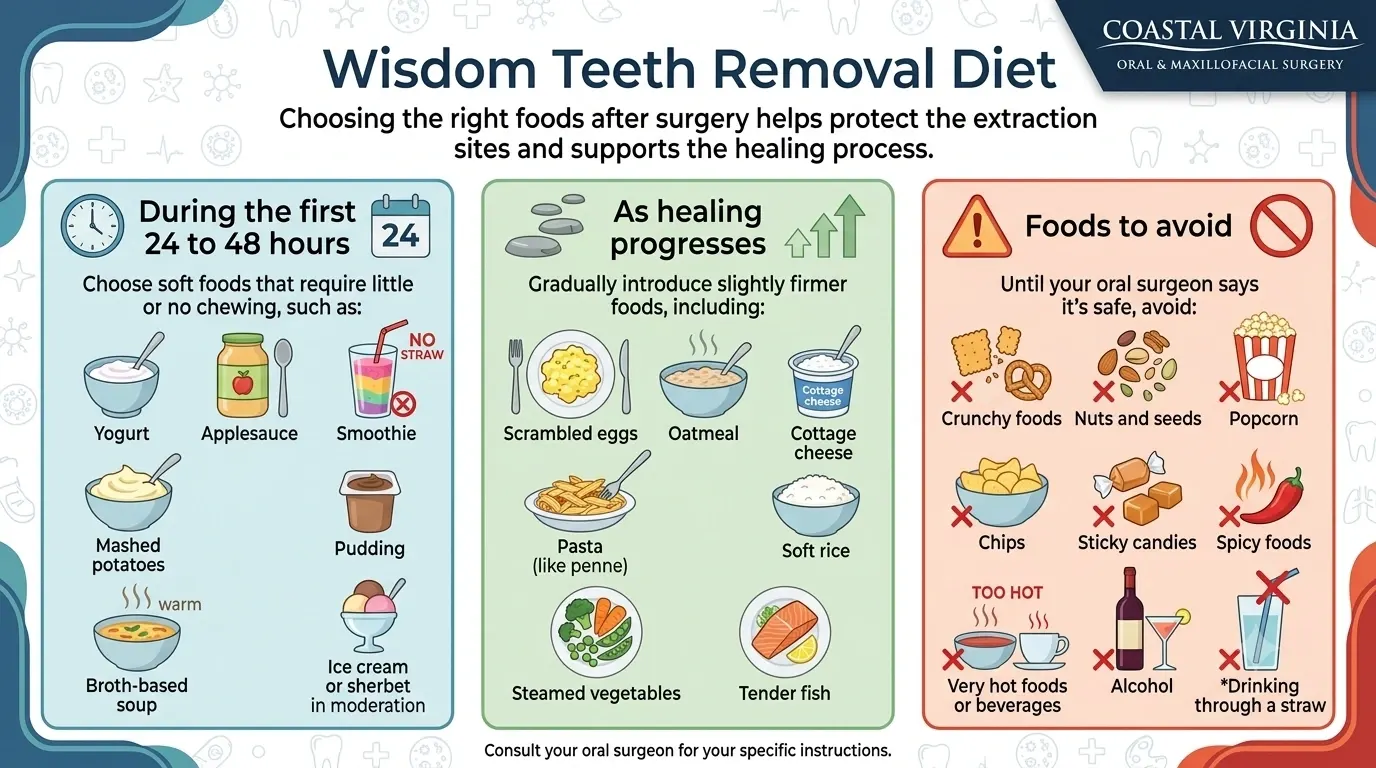
Choosing the right foods after surgery helps protect the extraction sites and supports the healing process.
During the first 24 to 48 hours
Choose soft foods that require little or no chewing, such as:
- Yogurt
- Applesauce
- Smoothies (without using a straw)
- Mashed potatoes
- Pudding
- Broth-based soups (once cooled to a warm temperature)
- Ice cream or sherbet in moderation
As healing progresses
Gradually introduce slightly firmer foods, including:
- Scrambled eggs
- Oatmeal
- Cottage cheese
- Pasta
- Soft rice
- Steamed vegetables
- Tender fish
Foods to avoid
Until your oral surgeon says it's safe, avoid:
- Crunchy foods
- Nuts and seeds
- Popcorn
- Chips
- Sticky candies
- Spicy foods
- Very hot foods or beverages
- Alcohol
- Drinking through a straw
Staying hydrated is equally important. Drink plenty of water, but avoid vigorous rinsing during the first 24 hours so the protective blood clot can remain in place.
When Should I Call the Dentist or Oral Surgeon After the Procedure?
While mild discomfort and swelling are expected, certain symptoms may indicate that you should contact your dental provider promptly.
Call your oral surgeon if you experience:
- Heavy bleeding that does not improve with pressure
- Severe pain that worsens after several days
- Increasing swelling after the third day
- Fever or chills
- Pus or drainage from the extraction site
- Persistent bad taste or foul odor in the mouth
- Difficulty swallowing or breathing
- Numbness that does not begin to improve after the anesthesia has worn off
Early evaluation can help identify complications such as infection or dry socket before they become more serious.
It's also important to attend any scheduled follow-up appointments so your oral surgeon can monitor healing and answer any questions about your recovery. If you're ever unsure whether a symptom is normal, it's best to contact the office for guidance rather than waiting for it to worsen.
FAQs
Questions about wisdom teeth removal are responded below by the Dr. Frank Beale. Check it out!
Do all wisdom teeth need to be removed?
“No. Wisdom teeth only need to be removed if they are causing problems or are likely to do so in the future. If they erupt fully, are properly aligned, remain healthy, and can be cleaned effectively, your dentist or oral surgeon may simply recommend monitoring them during routine checkups. The decision is based on factors such as tooth position, available space in the jaw, oral hygiene, and the risk of future complications.”
How painful is a wisdom tooth removal?
“The procedure itself should not be painful because local anesthesia, sedation, or general anesthesia is used to keep you comfortable. After surgery, it's normal to experience soreness, swelling, and mild to moderate discomfort for several days. Most patients find that prescribed or over-the-counter pain medications, combined with ice packs and proper aftercare, effectively manage these symptoms.”
Can I brush my teeth after wisdom teeth removal?
“Yes, but you should do so carefully. You can usually brush your teeth the day after surgery while avoiding direct contact with the extraction sites. Keeping the rest of your mouth clean helps reduce bacteria and supports healing. Your oral surgeon may also recommend gently rinsing with warm salt water after the first 24 hours.”
When can I exercise again after surgery?
“Most patients should avoid strenuous exercise for at least 48 to 72 hours following wisdom teeth removal. Physical activity can increase blood pressure and may trigger bleeding or interfere with the healing blood clot. Depending on the complexity of your procedure, your oral surgeon may recommend waiting longer before returning to vigorous exercise or contact sports.”
Will I need stitches after wisdom teeth removal?
“Not always. Stitches are commonly used when impacted wisdom teeth require surgical removal or when an incision is made in the gum. In many cases, dissolvable sutures are used and disappear on their own within one to two weeks. Your oral surgeon will let you know if a follow-up appointment is needed to remove non-dissolvable stitches.”
Can wisdom teeth grow back after removal?
“No. Once a wisdom tooth has been completely removed, it cannot grow back. However, some people have extra teeth, called supernumerary teeth, that may develop in the same general area. Although uncommon, these additional teeth can sometimes be mistaken for 'new' wisdom teeth on future dental X-rays.”
What happens if I don't remove my wisdom teeth?
If problematic wisdom teeth are left untreated, they may lead to complications such as:
- Repeated gum infections
- Tooth decay
- Damage to neighboring teeth
- Cysts that develop around impacted teeth
- Crowding or pressure on adjacent teeth
- Chronic pain or swelling
Not every wisdom tooth requires extraction, but regular dental examinations and imaging are important to monitor teeth that have not been removed.
Are there alternatives to wisdom teeth removal?
“If wisdom teeth are healthy, fully erupted, and not causing any problems, active treatment may not be necessary. Instead, your dentist or oral surgeon may recommend periodic monitoring with routine examinations and dental imaging.”
When symptoms are caused by temporary gum inflammation around a partially erupted wisdom tooth, conservative treatments—such as improved oral hygiene, professional cleaning, or medication to control infection—may provide short-term relief. However, if the underlying problem persists or the tooth continues to pose a risk to your oral health, surgical removal is often the most effective long-term solution.
Prepare for a Smoother Wisdom Teeth Recovery
Wisdom teeth removal is a routine oral surgery that can help prevent future complications such as impaction, infection, damage to neighboring teeth, and persistent discomfort. While the thought of surgery may feel intimidating, understanding what happens before, during, and after the procedure can help you approach treatment with greater confidence.
In this guide, we've explained what wisdom teeth removal involves, why extraction may be recommended, and what you can expect on the day of surgery. We also covered the typical recovery timeline, common side effects, dietary recommendations, warning signs that require prompt medical attention, and answers to frequently asked questions about healing, pain, stitches, and long-term oral health.
Preparing before your procedure is just as important as following your postoperative instructions. Knowing what to expect, arranging transportation if you'll receive sedation, and planning your recovery at home can make the healing process more comfortable.
For additional guidance, visit our blog post on “How to Prepare for Oral Surgery”.
By understanding the procedure and following your oral surgeon's recommendations, you can support a smoother recovery and protect your oral health for years to come.
